The mood tracker that actually connects to your HRV.
Native Oura, Whoop, and Apple Watch integration. Weekly insight reveals that explain how your HRV, sleep, and mood move together. Not another chart you have to read yourself.
Why HRV is the missing variable in mood tracking
Heart rate variability is one of the strongest physiological signals of stress, recovery, and emotional state. Low HRV tends to correlate with stress and fatigue. High HRV tends to correlate with rest and resilience.
Mood trackers that ignore HRV are missing the single most useful data point for understanding why you feel the way you feel.
Therma is built to do the interpretation work. The AI weekly insight reveal connects your HRV to your sleep, your caffeine, your workouts, your conversations, and your mood.
The weekly insight reveal
Every week, Therma produces a short narrative that connects your mood entries to the health data your wearables captured. Not a chart dump. A paragraph that tells you what happened.
You might learn that your HRV dropped 12 percent on nights when you had more than one drink, or that your best days started with workouts scheduled before 9 AM. Patterns you would never catch yourself.
The insight reveal is the core of Therma. The daily check-in is the raw material. Your wearable data is the context. The AI is the interpreter.
When readiness is low but you feel fine
There is one thing your ring will never tell you, no matter how many sensors the next model adds: why. It can see that your recovery tanked overnight. It cannot see that the call went badly and you are still holding it. The why was never in your body's data. It lives in the day you had, the one input your wearable never gets.
That gap is why a readiness score can feel so off. Some mornings it says 42 and you feel fine. Some mornings it says 85 and you are somewhere else entirely. The number is real. It is just missing its story.
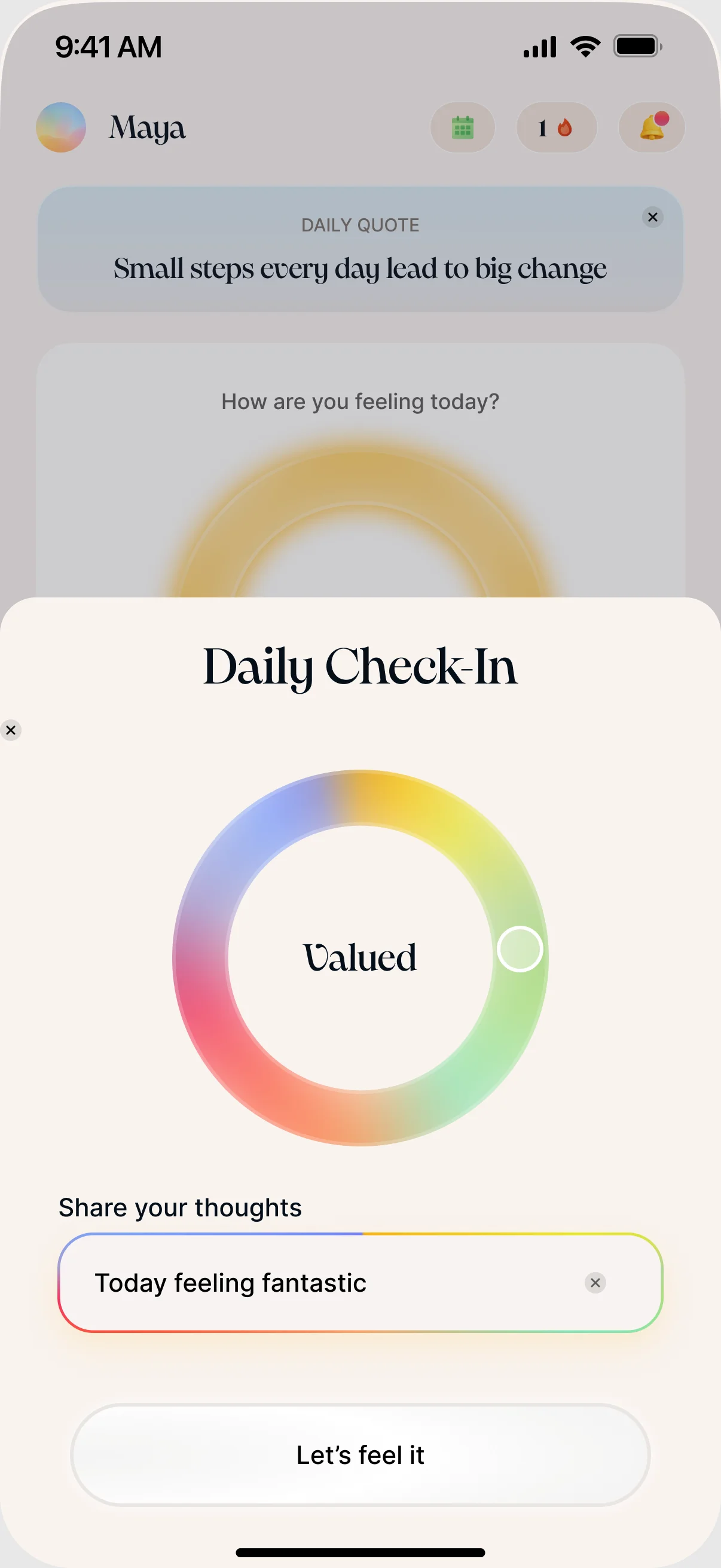
This is where the 60-second check-in earns its place next to the ring. A bad score stops being a verdict and becomes a question: something looks off, do you know why? Most of the time you do. You just have not said it anywhere yet. Say it once in Therma, and the weekly reveal can put the score and the day side by side.
Native integrations, not an Apple Health bridge
Most mood-tracking apps that claim HRV support route data through Apple Health. That works for a rough number but loses context. Therma is being built with direct integrations.
- Oura. Direct Oura API connection. Pulls sleep stages, HRV, readiness, and temperature deviation without the Apple Health bridge.
- Whoop. Native Whoop integration. Whoop does not push data to Apple Health by default, so most mood trackers cannot see Whoop HRV at all. Therma connects directly.
- Apple Watch. Full Apple Health sync for users who prefer the Apple ecosystem. HRV, sleep, activity, and workouts flow in automatically.
- Garmin and Fitbit. On the roadmap. We are prioritizing Oura, Whoop, and Apple Watch first because those are the wearables our users already use.
How Therma compares to other HRV-aware apps
A few other apps touch HRV. Most are HRV-first tools with a mood slider bolted on. Therma is the opposite: a mood-first tool with deep HRV built in. See the full ranked roundup.
Common questions
What is an HRV mood tracker?
An HRV mood tracker is an app that connects your heart rate variability data to your daily mood logs. HRV is one of the strongest physiological signals of stress, recovery, and emotional state.
Does Therma connect to Oura?
Yes. Therma is being built with native Oura integration, pulling sleep stages, HRV, readiness, and recovery data directly.
Does Therma work with Whoop or Apple Watch?
Yes. Therma supports Whoop and Apple Watch alongside Oura. Whoop is especially important because most mood trackers cannot see Whoop HRV at all.
Why does HRV matter for mood tracking?
Low HRV correlates with stress, fatigue, poor recovery, and often a rougher mood. A mood tracker that does not see HRV is missing one of the most load-bearing variables.
My readiness score is low but I feel fine. Which one is right?
Both can be true. The score reads your body: sleep debt, HRV, resting heart rate. It cannot read your day. A 60-second check-in adds the missing half, so a low score becomes a question with an answer instead of a verdict you argue with over coffee.
How is Therma different from Welltory or HRV4Training?
Those are HRV-first apps that added mood logging. Therma is a mood-first app that integrates HRV deeply.
Is my HRV data private?
Yes. Therma is encrypted by default. Your data is encrypted, isolated, and access-audited.
When can I use Therma?
Therma is available now on the App Store for iOS.
Try Therma
Connect your HRV to your mood. Let the AI do the interpreting.
Native Oura, Whoop, and Apple Watch integration. Weekly insights that connect HRV and mood. Available now on iOS.
Download on the App Store